4 Inch vs 5 Inch Fat Tire: Which Is Better — Width, PSI and Traction Tested
Why a Factory Writes a Tire-Width Comparison
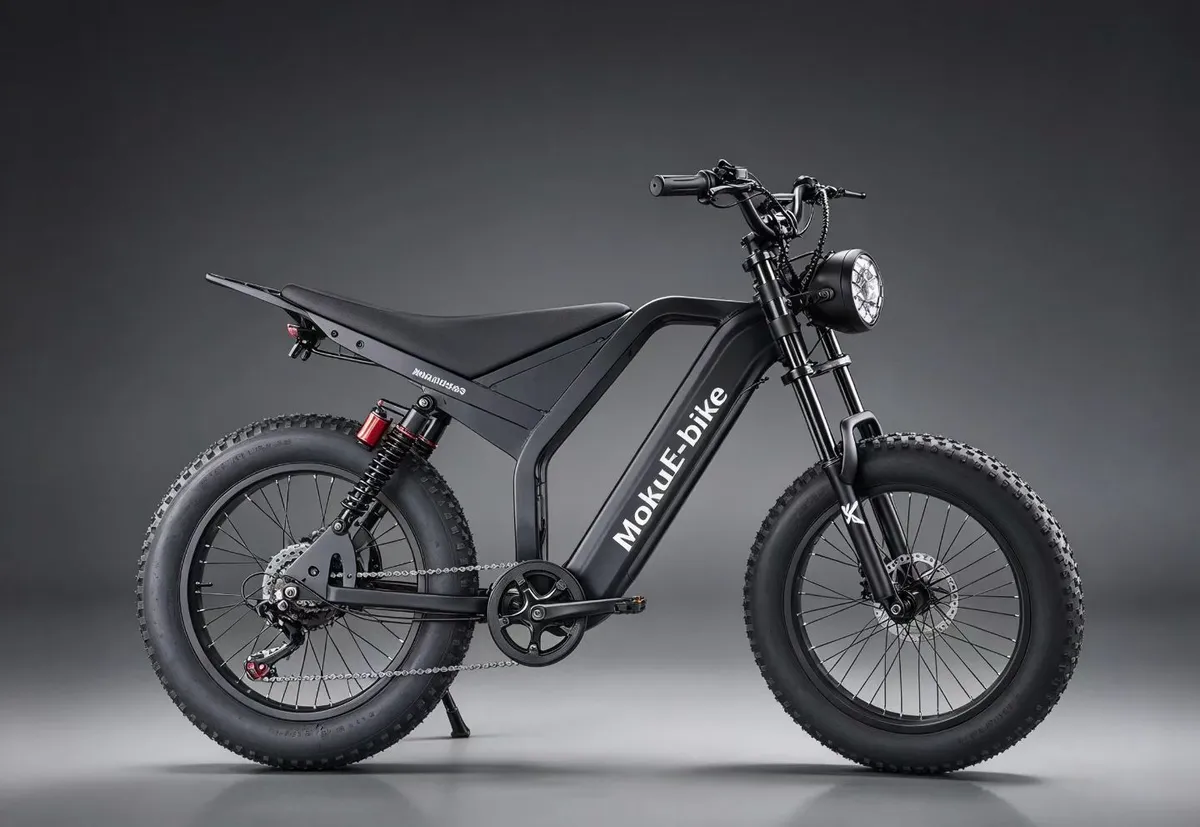
After years of exporting fat tire bikes, the single most frequent configuration question from buyers is whether to spec 4 inch or 5 inch. We mass-produce both — beach models, snow models and e-fat bikes are all running. This article lays out our measured data on tire width, pressure ranges and traction, so you can spec according to the actual terrain of your target market instead of guessing on a purchase order.
4 Inch vs 5 Inch: The Hard Numbers
Start with the measurable specs. A 4 inch fat tire runs about 100 mm of real width on rims 65 to 80 mm wide, weighing 1.2 to 1.5 kg per tire. A 5 inch fat tire runs about 125 mm on rims 80 to 100 mm wide, weighing 1.6 to 2.0 kg. Contact patch is the decisive difference: at the same tire pressure, the 5 inch puts roughly 25 to 30 percent more rubber on the ground, which means better flotation — but the extra half-kilo per tire shows up immediately on starts and climbs. At complete-bike level, a 4 inch build is 1 to 1.5 kg lighter overall, and on long rides that difference is felt in the legs.
Beach Riding: Flotation Comes First
Beach terrain is decided by flotation. On soft dry sand, a 4 inch tire dropped to 6 to 8 PSI will roll, but the front end wanders and corners dig in. A 5 inch at 4 to 6 PSI spreads the load wider, floats clearly better and stays planted in a straight line and in turns. In our own comparison runs on the tidal flats outside Tianjin, the same bike and same rider moved roughly 20 percent faster through dry sand on 5 inch, with noticeably less pedaling effort. For buyers targeting pure beach markets — the Gulf coast, North Africa, Australia — we recommend going straight to 5 inch. Where sand is only occasional and most miles are on pavement, 4 inch is the balanced choice.
Snow and Mud: Where 5 Inch Pulls Ahead
Snow and mud follow the same physics as sand: the larger the contact patch, the less you sink. In fresh snow up to 10 centimeters, a 4 inch at 5 to 8 PSI is adequate; in deep snow, slush and freeze-thaw muck, the 5 inch advantage multiplies. This is especially true on rear-drive e-fat bikes: once the torque comes in, a narrower tire tends to dig a hole, while the 5 inch converts that torque into forward traction instead of wheelspin. For snow models going to Scandinavia, Canada or Russia, 5 inch is effectively the default spec.
Pavement and Mixed Terrain: 4 Inch Is More Practical
If ninety percent of a customer's riding is city streets, gravel and hardpack, 4 inch is the more sensible spec. Lower rolling resistance, lighter steering, lighter bike — with visibly better top speed and range. On e-bike versions the gap widens: with the same 48 V 15 Ah battery, a 4 inch build delivers 8 to 12 percent more range than 5 inch. For a commuter-plus-weekend-trail use profile, the 4 inch tire width already offers far more stability than a regular mountain bike tire, and 5 inch on that terrain is simply dead weight.
Measured PSI Reference Table
Fat tire bike PSI for sand riding is the most common after-sales question we get, so here are the reference values. For 4 inch tires: pavement 20 to 25 PSI, gravel 12 to 16 PSI, beach 8 to 10 PSI, deep sand 6 to 8 PSI. For 5 inch tires: pavement 15 to 20 PSI, gravel 10 to 14 PSI, beach 6 to 8 PSI, deep sand 4 to 6 PSI, snow 5 to 8 PSI. Go below the floor and you risk debeading or rim strikes; go above the ceiling and the fat tire loses its whole point. We advise shipping each bike with a low-pressure gauge, since ordinary gauges read poorly under 10 PSI. A tubeless setup lets you drop another 1 to 2 PSI with better puncture resistance.
Fat Tire vs Standard Tire on a Beach Bike
Buyers often ask how big the gap is between a fat tire vs standard tire beach bike. A standard mountain tire at 2.1 to 2.4 inches barely manages on firm wet sand and digs in hopelessly on soft dry sand — that is physics, not something technique can fix. The whole point of a fat tire is spreading the bike's weight over a larger contact area so ground pressure drops and the bike floats on the surface. For beach resort rental fleets and coastal city commuting, a fat tire is not an upgrade but an entry ticket — which is exactly why orders from Middle East and Southeast Asian coastal markets keep growing.
Traction, Rolling Resistance and Cost: The Trade-Off
Choosing a width means balancing three variables. On traction, 5 inch wins, especially on soft ground. On rolling resistance and weight, 4 inch wins, with better efficiency on pavement. On cost, a 5 inch tire runs 15 to 25 percent more per unit than 4 inch, the matching rims cost more too, and the complete-bike ex-factory difference lands at 8 to 15 dollars. Frame compatibility also matters: 5 inch needs a dedicated fat frame with 190 mm rear spacing and a matching fork — you cannot force it onto a 4 inch frame, and chain and bottom-bracket clearances must be rechecked. We keep both frame platforms in production, so switching specs requires no new tooling.
Configuration Advice for Buyers
Our conclusions, by market. Pure beach and snow markets — Gulf coasts, Scandinavia, Canada — go straight to 5 inch, with tubeless setup and a low-pressure gauge; the selling point is all-terrain capability. Urban commuting plus light trail markets — European and Southeast Asian cities — go 4 inch and lead with light weight and range. For markets that want both, push 4 inch as the volume seller and 5 inch as the premium option, sharing one frame platform to dilute cost. If you are unsure about your market's terrain, send us the main sales cities and usage scenarios; we will return tire spec and pressure calibration recommendations based on measured data, and sample bikes can be built with both tire options for a back-to-back test ride.