Fat Tire Electric Bike Manufacturer: Complete Guide
Factory Capabilities
We're in Tianjin, with 15,000 square meters of factory space, 4 production lines, over 110 workers including 8 certified welders and 6 quality inspectors. Monthly production capacity valued at 1,000,000 RMB. One of our 4 lines is dedicated to fat tire electric bikes — from frame welding to final assembly, all on this line. Frames use 6061 aluminum with TIG welding, 10% weld inspection rate, stress-relief heat treatment, and powder coating at 80 to 100 microns. The factory is 25 km from Tianjin port — half a day from loading to dock, with 5x40HQ containers shipped daily.
Fat Tire Frames and Tire Width
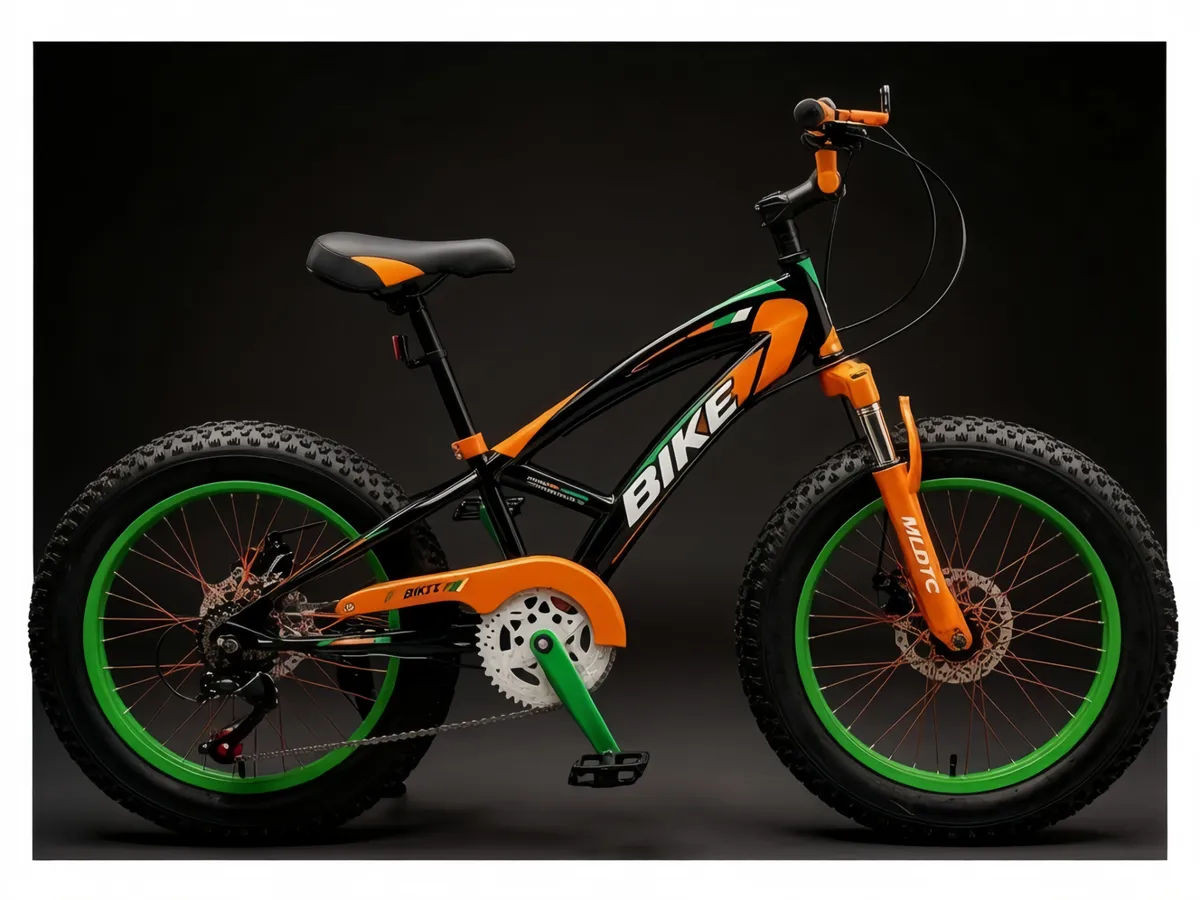
The defining feature of a fat tire bike is the wide tire. We build tire widths from 4.0 to 4.8 inches, with 4.0 inch being the most common. The 4-inch fat tire is the market mainstream, balancing grip and weight. At 4.8 inches, grip is stronger but rolling resistance is higher, suited for soft sand and deep snow. Wheel sizes from 20 to 26 inches are all available. The 20-inch wheel with 4.0-inch tire is the classic beach cruiser combination — low center of gravity, easy to handle. The 26-inch wheel with 4.0-inch tire suits off-road and long-distance, with better rollover capability. Frame chain stays are widened to 100 to 110mm for tire clearance, hubs widened to 135 to 150mm front and rear. Wheels use double-wall aluminum rims, 14-gauge stainless steel spokes, hand-laced with tension calibration.
Beach Cruiser
Building a fat tire e-bike beach cruiser is a different path from building an off-road fat tire bike. Beach cruiser geometry leans toward comfort: head tube angle 70 to 72 degrees, chain stay length 460 to 480mm, bottom bracket height 280 to 290mm, seat tube angle 73 to 75 degrees. Riding position is upright, handlebars rise 80 to 100mm, saddle is wide and plush. Equipped with 250W to 500W hub motors, battery from 36V 10Ah to 48V 15Ah. The beach cruiser isn't about speed — it's about comfort and stability. Tire pressure at 8 to 12 psi, won't sink in soft sand. Colors tend toward bright — mint green, coral orange, sky blue, with powder coat and glossy decals.
Motor and Battery Configuration
Fat tire e-bikes offer two motor choices. Hub motors from 250W to 750W, mounted in the rear wheel center, simple construction and lower cost, sufficient for city and beach riding. Mid-drive motors from 250W to 500W, mounted at the bottom bracket, low center of gravity and better handling, 15 to 20% higher climbing efficiency for off-road and climbing. Batteries are assembled in-house — 18650 cells from Samsung, LG, or domestic brands, all incoming cells 100% tested for voltage and internal resistance, grouped within 0.02V and 5mOhm. Spot welding, BMS installation, potting, 24-hour aging, daily output 2,000 packs, 100% self-sufficiency. Battery capacity: 36V 10Ah gives 30 to 40 km range, 48V 15Ah gives 60 to 80 km, 48V 20Ah gives 80 to 95 km. Battery housing rated IP65, available as down-tube integrated or rear rack external mounting.
OEM Manufacturing Process
For fat tire OEM manufacturing, our process has five steps. Step one: requirement discussion, 1 to 3 days — the client provides drawings or a sample bike, we confirm tire width, wheel size, motor type, battery capacity, and color/decals. Step two: quote confirmation, 3 to 5 days, delivering a BOM and cost breakdown. Step three: sampling, 7 to 15 days to build a prototype. The client inspects and provides feedback, typically 1 to 2 revision rounds. Step four: mass production, 20 to 35 days. Step five: inspection and shipping, full inspection with quality reports. Total cycle from first contact to shipment: 45 to 60 days. MOQ: 50 units per model, with mixed orders negotiable. Sampling fee: $500 to $2,000, refunded on production orders. Client brand decals and packaging customization available, with brand protection agreements signed.
Quality Control
Incoming materials are inspected weekly — tubing hardness, wall thickness, cell voltage and internal resistance all checked, with a 1.2% defect rate. Any batch exceeding 3% is returned. Each welding line has 1 inspector. After welding, frames undergo heat treatment: 535-degree solution treatment for 2 hours, water quench, then 175-degree artificial aging for 8 hours to relieve internal stress. Post-painting, cross-hatch and 48-hour salt spray tests. The assembly line has 6 inline inspectors, and every bike undergoes three checks before shipping: wheel tension calibration, brake adjustment, and a test ride to check for noise. Frame fatigue testing at 10,000 cycles, 97% first-pass rate. Three units per batch retained for traceability. European models undergo EN 15194 testing, US models meet CPSC, Middle East models get GCC certification. Battery UN38.3 and MSDS shipped with every batch.
Container Loading
Fat tire bikes are bulky, so container quantities are lower than standard bikes. A 40HQ container with fat tire bikes: 20-inch wheel with 4.0-inch tire, front wheel removed and boxed, 80 to 90 units per container. 26-inch wheel with 4.0-inch tire, front wheel removed, 60 to 70 units. If not disassembled, fully built: 20-inch 50 to 55 units, 26-inch 40 to 45 units. Clients can choose disassembled or fully built loading based on their distribution needs at destination. Packaging uses 5-layer corrugated cartons, with optional wooden frame protection. Each carton includes an accessory kit and manual. Factory to port: 25 km, half a day from loading to dock.
Wholesale Pricing
As a fat tire factory, FOB Tianjin pricing falls into several tiers. 20-inch 4.0-inch tire 250W hub motor 36V 10Ah: $380 to $450. 20-inch 4.0-inch tire 500W hub motor 48V 15Ah: $520 to $650. 26-inch 4.0-inch tire 500W mid-drive 48V 15Ah: $650 to $780. 26-inch 4.8-inch tire 750W mid-drive 48V 20Ah: $820 to $980. Pricing depends mainly on motor type, battery capacity, and paint requirements. Orders above 1,000 units get volume discounts. Payment: 30% deposit, balance before shipment. Warranty: frame 2 years, battery and motor 1 year. Spare parts stocked at 3% of order volume, shipped with the order.
Selection Advice
Finally, a few recommendations. First, wider isn't always better. 4.0 inches handles 90% of scenarios; 4.8 inches is only necessary for soft sand and deep snow, and feels heavy and slow on normal terrain. Second, wheel size depends on use. 20-inch for beach and city, 26-inch for off-road and long-distance. Third, hub vs mid-drive depends on budget and use. Hub motor is sufficient for city and beach flat roads, mid-drive for off-road and climbing. Fourth, don't undersize the battery. A 500W motor with 36V 10Ah gives only 25 to 30 km — minimum 48V 15Ah. Fifth, brakes must be properly sized. Fat tire bikes are heavy, with longer stopping distances — 203mm hydraulic disc brakes are mandatory.