China E-Bike ODM Factory: Tianjin Shengben — Design to Delivery
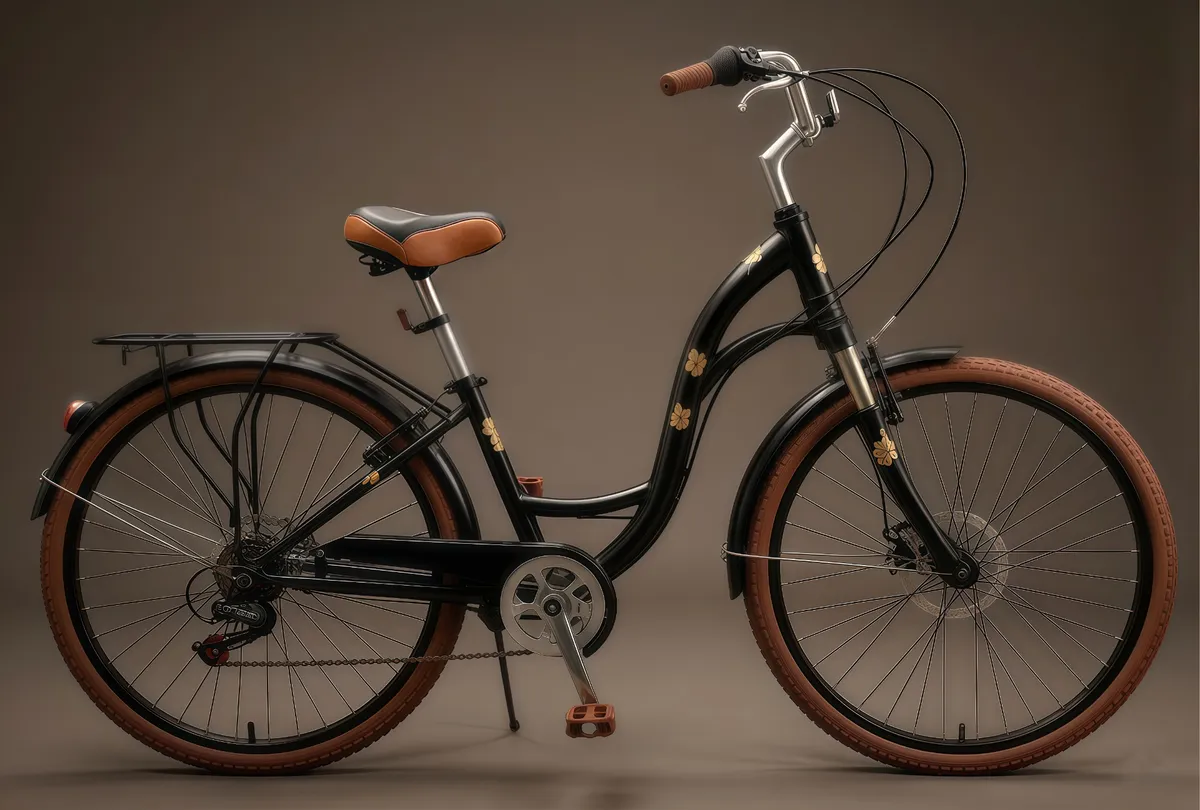
ODM vs OEM
Let's clarify the terms. OEM means you provide drawings and the factory builds to spec — no design involvement. ODM means the factory proposes designs and you choose — the factory handles concept to finished product. Many buyers say they want ODM when what they actually need is: "I have an idea but no drawings, help me design and build it." That's what we do. We have an in-house design team that can handle frame geometry, motor selection, battery solutions, and exterior decals. The client gives direction and market positioning; we deliver execution.
ODM Service Process
As a factory providing ODM services in China, our process has six stages. Stage one: requirement discussion, 1 to 3 days, understanding the client's target market, price range, regulatory requirements (Europe EN 15194, US CPSC, Middle East GCC), and target user profile. Stage two: design proposal, 7 to 15 days, delivering frame 3D drawings, exterior renderings, BOM configuration, and cost estimates. Stage three: sample building, 7 to 15 days to produce the first prototype. Stage four: testing and revision, the sample undergoes a 15 km road test, the client inspects and provides feedback, typically 1 to 2 revision rounds. Stage five: mass production, 20 to 35 days depending on order volume. Stage six: inspection and shipping, full inspection with quality reports, FOB Tianjin port container loading. Total cycle from first contact to shipment: 45 to 60 days under normal conditions.
Our Design Capabilities
Our design team has 3 members: one with 8 years in frame structure, one with 6 years in electrical systems, and one with 5 years in exterior and industrial design. Frame design uses SolidWorks, with 3D-printed prototypes to verify head tube angle and bottom bracket height before committing to tooling. For battery solutions, we assemble battery packs in-house — 18650 cells are 100% tested for voltage and internal resistance, grouped within 0.02V and 5mOhm, daily output 2,000 packs, 100% self-sufficiency. Motor selection covers hub 250W to 750W and mid-drive 250W to 500W, matched to the client's target market regulations. Exterior design provides 3 rendering options for the client to choose from, with decals applied to the client's brand under signed brand protection agreements.
Factory Scale and Capacity
Tianjin Shengben is located in Tianjin, with 15,000 square meters of factory space, 4 production lines, over 110 workers including 8 certified welders and 6 quality inspectors. Monthly production capacity valued at 1,000,000 RMB. The 4 lines cover city bikes, mountain bikes, fat tire bikes, and folding bikes. Frames use 6061 aluminum with TIG welding, 10% weld inspection rate, stress-relief heat treatment, and powder coating at 80 to 100 microns. All models for the European market undergo EN 15194 testing: 10,000-cycle frame fatigue, brake performance, electrical insulation, with a 97% first-pass rate. Incoming materials are inspected weekly with a 1.2% defect rate — any batch exceeding 3% is returned. Every bike undergoes a 15 km road test with 100 kg load before shipping, and 3 units per batch are retained for traceability.
In-House Battery Assembly
Many China electric bicycle factories buy battery packs from external pack makers. We don't. Our batteries go from raw cells to finished packs entirely in our own workshop. 18650 cells are available from Samsung, LG, or domestic brands, all incoming cells are 100% tested for voltage and internal resistance with grouping precision of 0.02V/5mOhm. Spot welding, BMS installation, potting, and 24-hour aging are all done in-house, with daily output of 2,000 packs and 100% self-sufficiency. This means we control our own battery supply chain without relying on third-party pack makers — both lead time and quality stay in our hands. UN38.3 test reports and MSDS are all on file, so customs clearance never gets held up.
Supply Chain Advantage
Tianjin is a bicycle industry cluster, with tubing, cells, motors, and tire suppliers all within a 30 km radius. We work with five cell suppliers, three motor factories, and six tubing suppliers — if one is delayed, we transfer volume to another. Critical materials have a two-week safety stock, so production never stops for missing parts. This cluster effect lets us iterate quickly on ODM projects — when a client wants to change a motor model, we pick up a sample from the supplier in the morning and have it on the prototype by the afternoon. This kind of speed is something factories outside industrial clusters simply can't match.
Pricing and MOQ
ODM MOQ is 50 units per model, with mixed orders negotiable. Sampling fee ranges from $500 to $2,000 depending on complexity, refunded upon mass production order. FOB Tianjin pricing: 250W city bike $380 to $520, 500W mountain bike $550 to $750, 500W fat tire bike $650 to $880. Orders above 1,000 units receive volume discounts. Payment terms: 30% deposit, balance before shipment. Warranty: frame 2 years, battery and motor 1 year. Spare parts are stocked at 3% of order volume and shipped with the order.
Partnership Advice
Three recommendations when choosing an ODM factory. First, check whether the factory actually has a design team — a factory without design capability can't do true ODM, only relabeling. Second, request a sample bike and ride it yourself — one lap tells you more than a hundred photos. Third, clarify IP ownership in writing. Our rule: when we propose a design and the client selects it, the client gets exclusive use — we don't keep it or sell it to anyone else. Put this in the contract to protect the client's interests.