How to Choose an Electric Mountain Bike: Buying Guide
Hardtail or Full Suspension
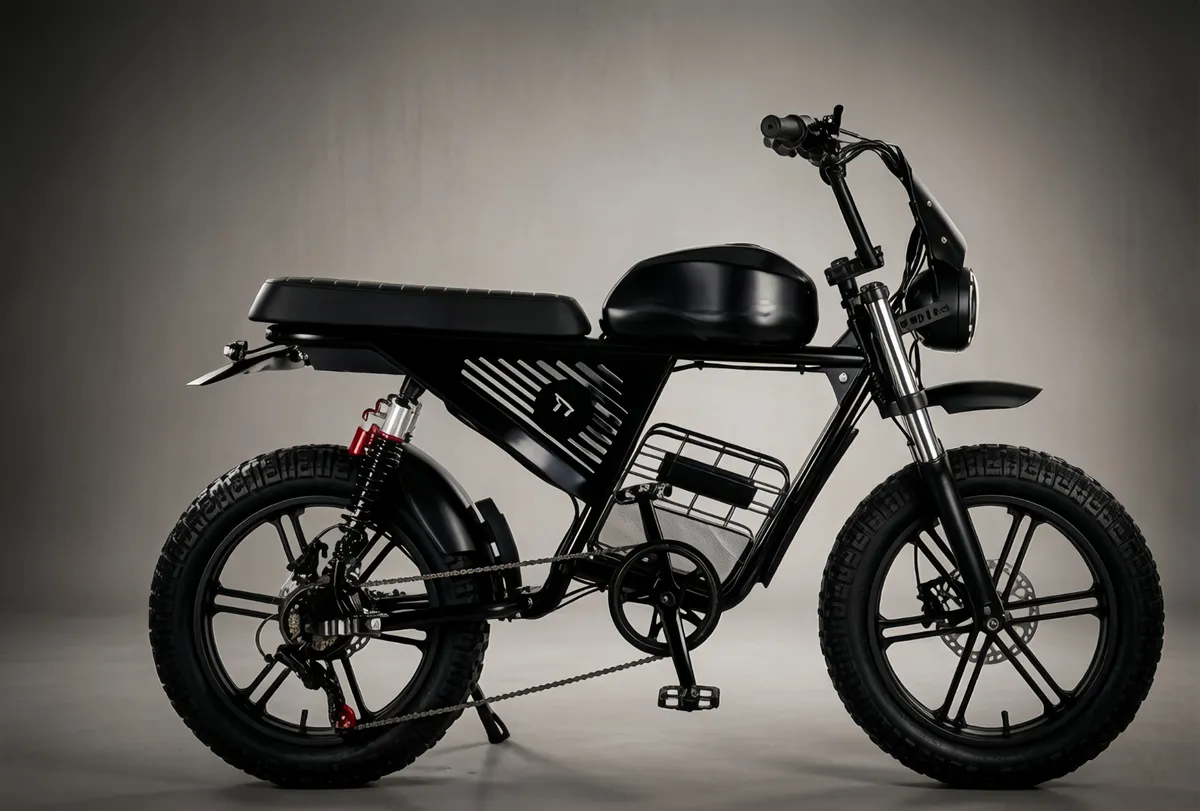
For hardtail vs full suspension mountain bike: hardtails have suspension only in the front fork, with a rigid rear triangle. They're simpler, lower maintenance, cheaper, and more efficient on climbs — ideal for XC and light trails. Full suspension bikes have front and rear suspension, offering better downhill traction and stability, but add 1 to 2 kg, cost 30% to 50% more, and have more service points. On a budget and mostly riding paved roads plus light off-road? Go hardtail. Higher budget and hitting rock gardens and descents? Go full suspension. We build both.
29er or 27.5
29er vs 27.5 mountain bike which is better? 29-inch wheels are larger, roll over obstacles more easily, carry more speed on straights, and offer better rollover capability — suited for taller riders and long-distance cross-country. 27.5-inch wheels are more agile, accelerate faster, and handle tighter — better for medium-height riders and technical twisty trails. Riders 175 cm and above should consider 29er; 165 to 175 cm can go either way; below 165 cm, 27.5 fits better. Wheel choice also depends on riding style: racing favors 29er, technical riding favors 27.5.
Frame Sizing
E-MTB sizing comes down to seat tube length and effective top tube length. Riders 160 to 170 cm should choose size S, which corresponds to a 15 to 17 inch frame with 27.5 wheels. Riders 170 to 180 cm take size M, a 17 to 19 inch frame, compatible with either 27.5 or 29 wheels. Riders 180 to 190 cm go with size L, 19 to 21 inches, paired with 29 wheels. Riders 190 cm and above need size XL, 21 inches and up, also with 29 wheels. E-bikes have battery placement that affects standover height, so test-straddle if possible. Leave 5 to 8 cm clearance between top tube and inseam. Our frames come in 4 sizes, and geometry can be fine-tuned to client requirements.
Electric System Selection
E-bike features come down to several core elements. Motor type: mid-drive motors have a low center of gravity, better handling, higher torque — ideal for off-road; hub motors are cheaper, lower maintenance, better for commuting. Torque: off-road needs at least 60Nm; 60 to 85Nm is sufficient. Battery capacity: off-road riding consumes more power; 48V 15Ah (720Wh) delivers 40 to 60 km, 48V 20Ah (960Wh) delivers 60 to 80 km. Brakes: hydraulic disc brakes are mandatory, front 203mm / rear 180mm rotors. Drivetrain: Shimano Altus to XT level, 9 to 12 speeds. Suspension travel: XC 100 to 120mm, Enduro 150 to 180mm.
Key Specs to Compare
E-MTB comparison should focus on several specs. Frame material: 6061 aluminum vs carbon fiber — aluminum is durable, carbon is lighter. Total weight: aluminum hardtail 22 to 25 kg, full suspension 24 to 28 kg. Motor brand: Bosch, Bafang are mid-drive mainstream. Waterproof rating: IP65+ for riding in rain. Assist levels: 3 to 5 levels; cadence sensors are cheaper than torque sensors but feel less natural.
Common Buying Mistakes
First, overbuying — getting a 180mm Enduro rig when 80% of riding is on flat trails, spending extra money for weight you don't need. Second, underestimating battery — choosing 36V 10Ah for off-road and running out at 20 km. Third, ignoring motor placement — hub motors on technical descents feel unbalanced and increase crash risk. Fourth, skipping the test ride — geometry numbers don't tell the whole story. Fifth, cheaping out on brakes — the e-MTB buying guide baseline: hydraulic disc brakes are mandatory; mechanical discs are inadequate.
Our E-MTB Capabilities
Tianjin Shengben has 4 production lines, one dedicated to e-MTB. Frames use 6061 aluminum with TIG welding, 10% weld inspection rate, and stress-relief heat treatment. We build both mid-drive and hub motor e-MTBs with 60 to 85Nm torque. Battery assembly in-house: 18650 cells 100% tested, 2,000 packs daily. FOB Tianjin pricing: hardtail e-MTB $450 to $650, full suspension e-MTB $700 to $1,100. MOQ 50 units. Welcome to visit and test ride.