Electric Mountain Bike Manufacturer: Wholesale Guide
Factory Capabilities
We're in Tianjin, with 15,000 square meters of factory space, 4 production lines, over 110 workers including 8 certified welders and 6 quality inspectors. Monthly production capacity valued at 1,000,000 RMB. One of our 4 lines is dedicated to electric mountain bikes. Frames use 6061 aluminum with TIG welding, 10% weld inspection rate, stress-relief heat treatment, and powder coating at 80 to 100 microns. We build both hardtail and full suspension, accept 27.5 and 29 inch wheel sizes, 9 to 12 speed drivetrains, and hydraulic disc brakes from 180 to 203mm. The factory is 25 km from Tianjin port — half a day from loading to dock, with 5x40HQ containers shipped daily.
Electric System Configuration
The core of an electric mountain bike is the motor and battery. Two motor types: hub motors from 250W to 750W, simple construction, lower cost, rear-heavy; mid-drive motors from 250W to 500W, low center of gravity, better handling, torque multiplication through the gear system, 15 to 20% higher climbing efficiency. For electric mountain bikes, we recommend mid-drive motors because high power truly shines when paired with mountain bike handling. Batteries are assembled in-house — 18650 cells from Samsung, LG, or domestic brands, all incoming cells 100% tested for voltage and internal resistance, grouped within 0.02V and 5mOhm. Spot welding, BMS installation, potting, and 24-hour aging, daily output 2,000 packs, 100% self-sufficiency. Battery capacity: 36V 10Ah gives 30 to 40 km range, 48V 15Ah gives 60 to 80 km, 48V 20Ah gives 80 to 95 km.
Hardtail and Full Suspension
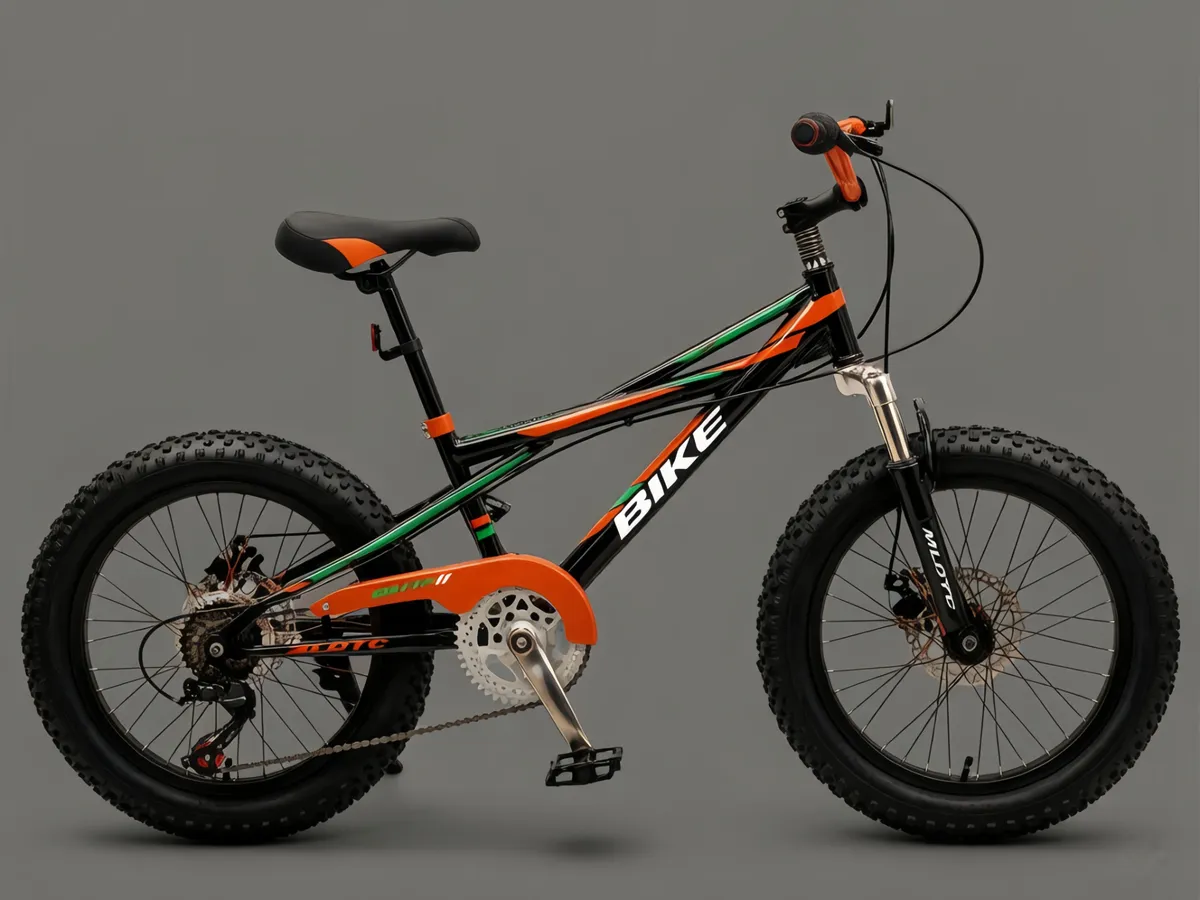
Hardtail frames have front suspension only with a rigid rear, 1 to 2 kg lighter, higher pedaling efficiency, suited for cross-country racing and climbing. Full suspension frames have both front and rear suspension, more stable on descents, but 30 to 50% more expensive and 1 to 2 kg heavier. Our hardtail frames weigh 1.8 to 2.2 kg, full suspension frames 2.8 to 3.5 kg. Fork travel from 100 to 180mm depending on use: 100 to 120mm for cross-country, 140 to 160mm for all-mountain, 180mm for downhill. Rear shock travel 120 to 160mm. Frame geometry: head tube angle 66 to 69 degrees, chain stay length 420 to 450mm, bottom bracket height 300 to 320mm.
OEM Manufacturing Process
For electric mountain bike OEM, our process has five steps. Step one: requirement discussion, 1 to 3 days — the client provides drawings or a sample bike, we assess feasibility and confirm target market regulatory requirements. Step two: quote confirmation, 3 to 5 days — we deliver a BOM, cost breakdown, and production schedule. Step three: sampling, 7 to 15 days to build a prototype, the client inspects and provides feedback, typically 1 to 2 revision rounds. Step four: mass production, 20 to 35 days depending on order volume. Step five: inspection and shipping — full inspection with quality reports, container loading. Total cycle from first contact to shipment: 45 to 60 days. MOQ: 50 units per model, with mixed orders negotiable. Sampling fee: $500 to $2,000, refunded on production orders.
Quality Control
Incoming materials are inspected weekly — tubing hardness, wall thickness, cell voltage and internal resistance all checked, with a 1.2% defect rate. Any batch exceeding 3% is returned. Each welding line has 1 inspector checking weld appearance and dimensions. After welding, frames undergo T6 heat treatment: 535-degree solution treatment for 2 hours, water quench, then 175-degree artificial aging for 8 hours to relieve internal stress and ensure strength. Post-painting, cross-hatch and 48-hour salt spray tests are conducted. The assembly line has 6 inline inspectors, and every bike undergoes three checks before shipping: wheel tension calibration, brake adjustment, and a test ride to check for noise. Frame fatigue testing at 10,000 cycles, 97% first-pass rate. Three units per batch are retained for traceability. European models undergo full EN 15194 testing, US models meet CPSC compliance, Middle East models get GCC certification.
Wholesale Pricing Tiers
Wholesale pricing falls into several tiers. Entry hardtail, 250W mid-drive motor, 48V 10Ah battery, 9-speed drivetrain, FOB Tianjin: $480 to $580. Mid-range hardtail, 500W mid-drive, 48V 15Ah battery, 10-speed, FOB: $550 to $750. Mid-high full suspension, 500W mid-drive, 48V 20Ah battery, 11 to 12-speed, FOB: $700 to $920. Premium full suspension, air rear shock, carbon fork, FOB: $880 to $1,200. Orders above 1,000 units get volume discounts. Payment: 30% deposit, balance before shipment. Warranty: frame 2 years, battery and motor 1 year. Spare parts stocked at 3% of order volume, shipped with the order.
Supply Chain Advantage
Tianjin is a bicycle industry cluster, with tubing, cells, motors, and tire suppliers all within a 30 km radius. We work with five cell suppliers, three motor factories, and six tubing suppliers — if one is delayed, we transfer volume to another. Critical materials have a two-week safety stock, so production never stops for missing parts. This cluster effect means fast iteration — a client wants to change a motor model, we contact the supplier in the morning and have a sample on a test bike by the afternoon. In-house battery assembly is the core advantage: cells to packs all done in-house, with lead time and quality in our own hands.
Factory Audit
When choosing an electric mountain bike supplier, factory audits matter. You're welcome to visit our factory in Tianjin. What to look at? Four lines: the welding line for welder technique and weld quality, with heat treatment furnace temperature logs; the painting line for coating thickness and salt spray test equipment; the assembly line for the QC process and test ride area; and the battery workshop for cell testing and pack assembly. Then sit down to discuss specs and pricing. Tianjin airport to factory: 50 minutes — a same-day round trip works. If an in-person visit isn't possible, we provide production line videos and sample bike test videos, and we accept third-party audit reports.
Selection Advice
Finally, a few recommendations. First, more motor power isn't always better. 250W is sufficient for flat terrain and gentle hills, 500W suits mountain trails and steep climbs, and 750W and above falls into electric motorcycle territory in most US states — requiring a license to ride on roads. Figure out your target user's terrain before choosing power. Second, don't undersize the battery. A 500W motor with 48V 10Ah gives only 25 to 30 km range — not enough. Minimum 48V 15Ah. Third, brakes must be properly sized. Electric mountain bikes are fast, with 30 to 40% longer stopping distances than regular mountain bikes — 203mm hydraulic disc brakes are mandatory, not optional. Fourth, choose aluminum for the frame. Carbon fiber is 600g to 1kg lighter but 2 to 3 times more expensive — aluminum offers better value and is more crash-resistant.